
We do eat a lot of meat; and some of us eat a great deal of meat.
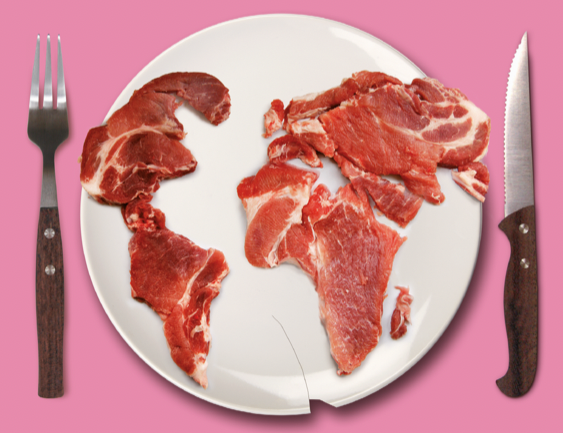
In 2018, 72,290,351,239 animals - cattle, chickens, goats, pigs, sheep, and turkeys - were slaughtered to satisfy the global meat demand. This means more than 8 million animals were killed every hour!
Data from Our World in Data.
But we also use animals for other purposes besides harvesting for meat. Currently, the main animal product are dairies, either from cows or buffalo. Every second 45,863 pounds of milk are produced.
Data from Our World in Data and FAO
If the present meat production is astounding, its evolution in the last 50 years is nothing short of phenomenal. In 1961, the joint production of cattle, pigs, eggs, poultry, sheep, and goats amounted to 83.6 million metric tons. In 2018, we increased that quantity five time to, 418.4 million tons.
This growth has been largely possible because of chickens. While in 1961 the world production of chickens was of 8.9 million ton; in 2018 it reached 127.3, more than 14 times more.
Data from Our World in Data and FAO. Production measured in metric tons.
As we have noted, poultry is the meat that has increased the most. There is a positive side to this as poultry has a good feed conversion ratio (the units of feed or crops required to produce a unit of meat), with ratios ranging from 2 to 5.
Data from Our World in Data and FAO. Production measured in metric tons.
Poultry are raised not just for their meat but also eggs which have become an important element in the global diet. There was some concern that it would not be possible to have enough hens for the whole world population to have one egg a week. But China has shown that it is possible. In 1961, China was producing 1.5 million tons, but in 2018 it reached 31.6 million tons - an increase of more than 21 times. Yet, this increase in production was also at the cost of animal wellbeing.
Data from Our World in Data and FAO. Production measured in metric tons.
When we think of meat, we generally visualize cattle. Beef and buffalo are still an important source of meat production. However, this production has not grown as much as poultry or pigs: in 1961 the global production of meat from cattle was 28.8 million ton and in 2018 it increased to 71.5 million tons, roughly 2.5 times mores. This is positive as cattle have the worst feed conversion ratio, ranging from 6 to 25 (this wide difference is explained by the quality of the feed given to cattle).
Data from Our World in Data and FAO. Production measured in metric tons.
Currently, Pigs are the world’s second largest meat production. The fact that it is haram for Muslims is surely a main reason it is not the top one. Where it is eaten, the whole body is consumed; and different body parts allow for a wide variety of foods; and pigs feed conversion ratio is not very bad, from 4 to 9.
Data from Our World in Data and FAO. Production measured in metric tons.
Finally, we have sheep and goats. Although the production of meat by sheep and goats is substantially lower than the other kind of meats, they are an important part of the diet in some cultures, particularly in Muslim societies. In places where wildlife has been reduced (or extinguished) they can play an important role by helping to manage forests and wild meadows.
Data from Our World in Data and FAO. Production measured in metric tons.
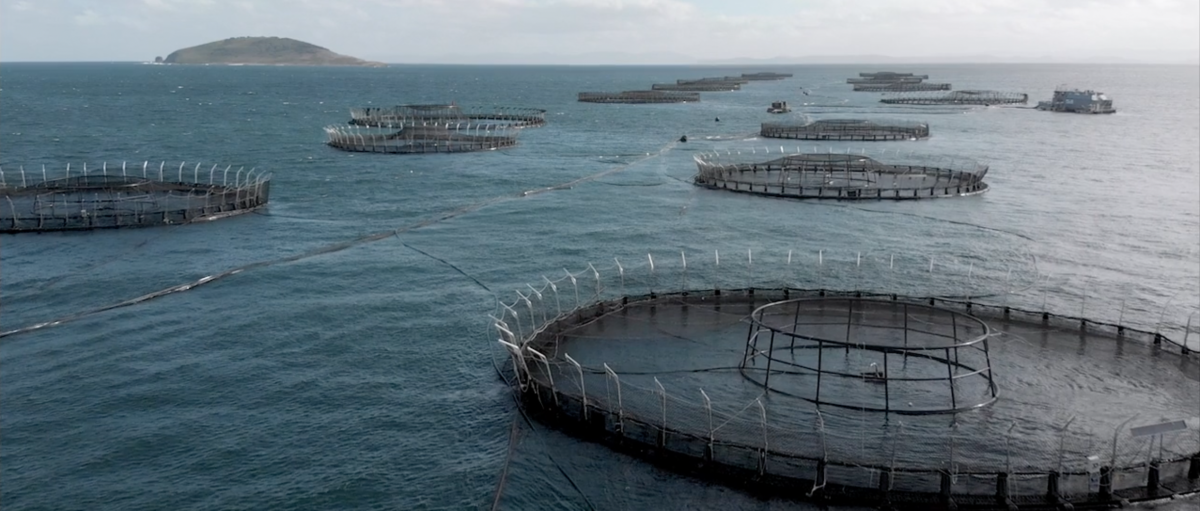
There is another significant type of meat that we have to consider: fish. Here, it is important to note how we have gone from a production mostly based on capture fisheries to the current situation in which more than half of the total production comes from aquaculture.
Data from Our World in Data. Production measured in metric tons.
Image from Flaticon
There are powerful reasons for promoting aquaculture. The main one is that farmed seafood is very resource efficient, with a feed conversion ratio of 1.1. But it also has to be noted that a significant portion of captures, about one third of world’s harvest, is devoted to feeding farmed fish.
Yet, aquaculture efficiency makes it a likely candidate to address food security issues if certain conditions are met. These conditions include: a tight control of chemical inputs (antibiotics, anti-foulants or pesticides), management of food waste, disease and parasite control, the clearing of land for agriculture feed, and social conflicts and labour exploitation. Still, the potential is there.
Data from WWF and The Fish Site
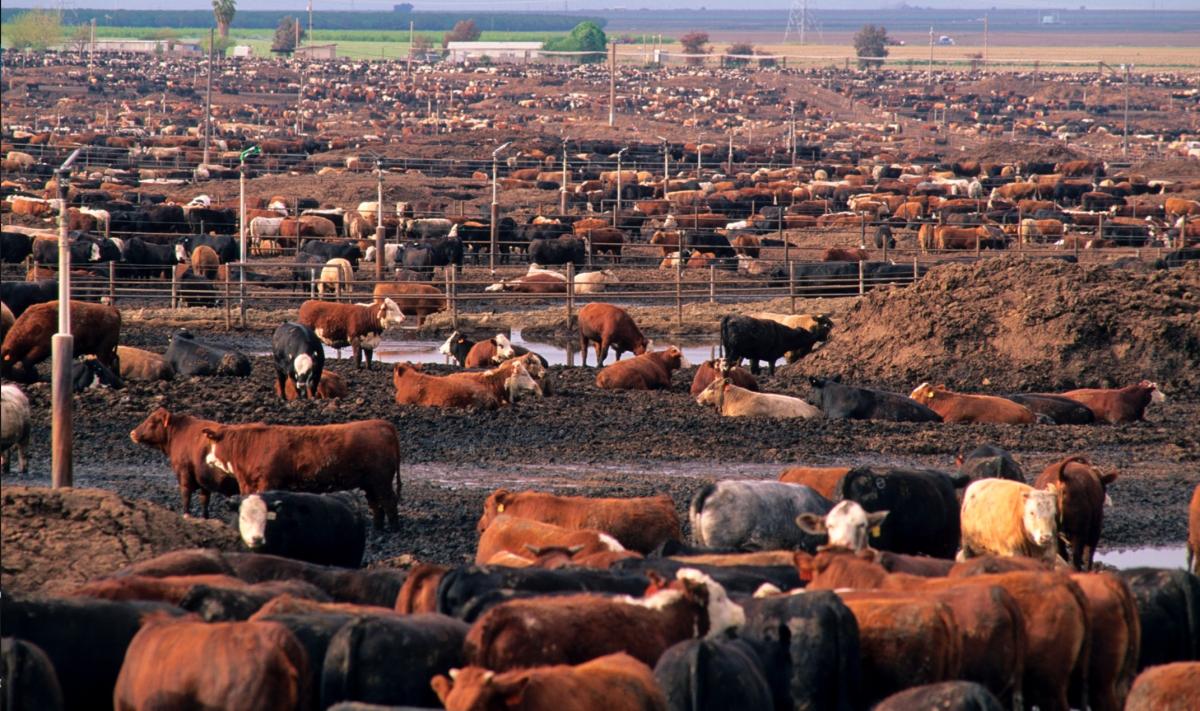
The point is that animal farming is costly. On average the yield of animal-based harvests is almost 3 times lower than of those of plant-based. Moreover, to feed these huge livestock we need equally large feeding crops. In South America alone, it is estimated that every year from 2005 to 2017, 89,000 hectares have been deforested on average to grow soy for animal feed. This means that cheaper plant harvests that could be used to feed humans are used for animal fodder to secure higher profits. In the process, we further lose a great deal of food because of the poor animal feed conversion ratio.
Data from The Humane Party and Meat Atlas 2021
Animal Farming also generate several environmental problems. Apart from the conversion of land, livestock sector alone produces 50% of human-induced methane (CH3), 60% of nitrous oxide (N2O) and 5% of carbon dioxide (CO2).
Additionally, the leading producers of fodder crops are among the largest users of pesticides (in many cases not allowed for human consumption crops) which contaminate groundwater and harm biodiversity.
Finally, the high concentration of livestock in industrial farms produce colossal quantities of manure that frequently end up polluting water resources.
Data from IPCC and Meat Atlas 2021
And yet we continue increasing the quantity of meat in our diet. Here we can see the average yearly consumption of meat per person. The differences are appalling and the ranking makes evident who is contributing more to this consumption.
But so much meat eating entails another risk: rendering antibiotics ineffective. Current animal husbandry employs a lot of antibiotics which, in turn, results in more and more microbial resistance threatening the effectiveness of antibiotics.
Data from Our World in Data and Meat Atlas 2021
Clearly our appetite for meat comes at a great cost, threatening most vulnerable people and future generations. British broadcaster David Attenborough eloquently summarised the situation in his documentary A life on Our Planet: ‘Earth cannot support billions of large meat-eaters’.
It is time we moved to a more sustainable diet. In part 3, we explore some alternatives to the current situation.