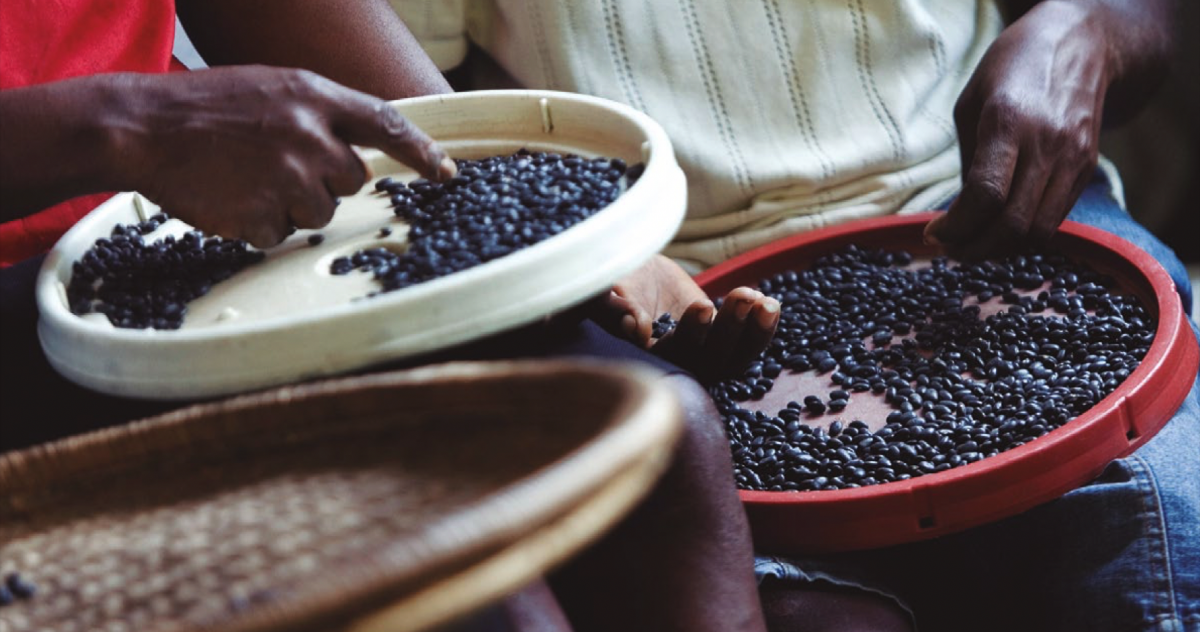
According to The Word Food Clock, every second we produce 125 tons of food. But only 84 of these are actually consumed; the other 41 tons is wasted. There is, as we have shown, a high environmental cost for harvesting all crops, and producing meat.
So, can find a more sustainable way to produce food? Can we aim at zero hunger? The goals not just to end hunger, but also achieve food security and improved nutrition while promoting sustainable agriculture. These are relevant and pressing challenges that we need to face.
The first challenge is to address food insecurity. According to UN, ‘there is more than enough food produced today to feed every last one of us.’ And yet about 811 million people are undernourished and, even worse, it seems that we are losing momentum to reach zero hunger.
But hunger is a complex phenomenon, and therefore food security is conceptualised through four dimensions: availability, access, utilization, and stability.
 Physical availability of food. This dimension addresses the ‘supply side’ of food security and is determined by the level of food production, stock levels and net trade.
Economic and physical access to food. This requires the design and implementation of policies to ensure household level food security.
Food utilization. This implies that each person gets sufficient energy and nutrient with good eating practices, food preparation, diverse diet, and intra-household fair equitable food distribution.
Stability of the other three dimensions over time. So that unexpected happenings like adverse weather conditions, political instability, or economic factors, such as unemployment and rising food prices, do not compromise the ability of people to enjoy the previous three conditions.
The International Food Policy Research Institute (IFPRI) has defined a score system, the ‘Global Hunger Index’ (GHI), to capture and monitor hunger with a single metric. The index combines four indicators:
Undernourishment: the proportion of undernourished people as a percentage of the population (reflecting the share of the population with insufficient caloric intake);
Child wasting: the proportion of children under the age of five who suffer from wasting (low weight for their height, reflecting acute undernutrition);
Child stunting: the proportion of children under the age of five who suffer from stunting (low height for their age, reflecting chronic undernutrition); and
Child mortality: the mortality rate of children under the age of five (partially reflecting the fatal synergy of inadequate nutrition and unhealthy environments).
The index scores countries on a 100-point scale where 0 is the best score (no hunger) and 100 the worst.
Data from Our World in Data.
There are several major drivers provoking food insecurity. By order of importance, we can identify conflicts, climate variability and extremes, economic slowdowns and downturns and, finally, the unaffordability of healthy diets. The drivers enforce each other. However, it is quite usual for more than one driver to be present.
Data from FAO
In stark contrast to hunger, there is also the growing problem of obesity. And the obesity pandemic is not limited to rich countries but has now become global. The increasing unaffordability of healthy diets explains why obesity is spreading globally, to the extent that 8% of global deaths in 2017 were the result of obesity.
It is worth noting that obesity is becoming a serious problem for many Muslim countries, especially in the MENA region.
Data from Our World in Data.
Sustainable production of food requires us to rethink agriculture.
Agriculture has had and keeps exerting a huge environmental impact. It is the single human activity that requires half of all available land. It appeared to be declining after 2001, but during the last three years it has grown again due to the extensive harvest of soybean, avocado and palm (for palm oil).
Data from Our World in Data. Surface measured in hectares.
Image from Flaticon
Palm oil is a good example of environmental impact. From 1983 to 2015, palm oil harvest area has grown, on average, more than 500,000 hectares every year, because it is a very profitable crop. Palm is very economical to grow: the whole of the palm fruit is used, both the flesh and the stone, to make oil, so it’s about 10 times as productive as soybean or rapeseed. Plus, it is a highly efficient crop; it is about nine times more productive per hectare than the next most productive oil.
However, all this growth has been at the expense of cutting down rainforests, which is a double tragedy. It has led to the enormous loss in biodiversity. Moreover, once the terrain is cleared, without the rainforest to keep the soil intact, the rain washes away its nutrients quite fast and it becomes a marsh with a high carbon emission. In short, palm oil is only profitable because its main costs are externalized.
Data from Our World in Data and Ethical consumer. Surface measured in hectares.
Image from Flaticon
Highly profitable crops have become a problem as they tend to siphon resources from other crops or even people. Avocado’s water demand is a good example of this.
Being a subtropical harvest, avocado requires a lot of water. On average, one avocado needs 227.12 litres of water to grow, which means that it takes around 2,000 litres of water to produce 1 kg of avocados. In areas with abundant rain, avocados can grow naturally, but when planted in dry areas, such as those with Mediterranean climate, they need even more water (and one can only imagine how much water does it take to grow avocados in Morocco or Tunisia). The situation is made worse by young trees, which demand even more water, so every time a new area is opened for avocado trees the water consumption skyrockets.
Yet, the profits gained from growing avocados are so high (it is called the green gold) that it attracts criminal activity to the point that some cartels are shifting from opium to avocado. Often, they force farmers to abandon traditional crops to harvest avocados. Thus, generating more food insecurity.
Data from FAO and Water Footprint Network. Production measured in metric tons.
To attain food security without compromising sustainability we need to reduce our reliance on agriculture and find alternative sources of food.
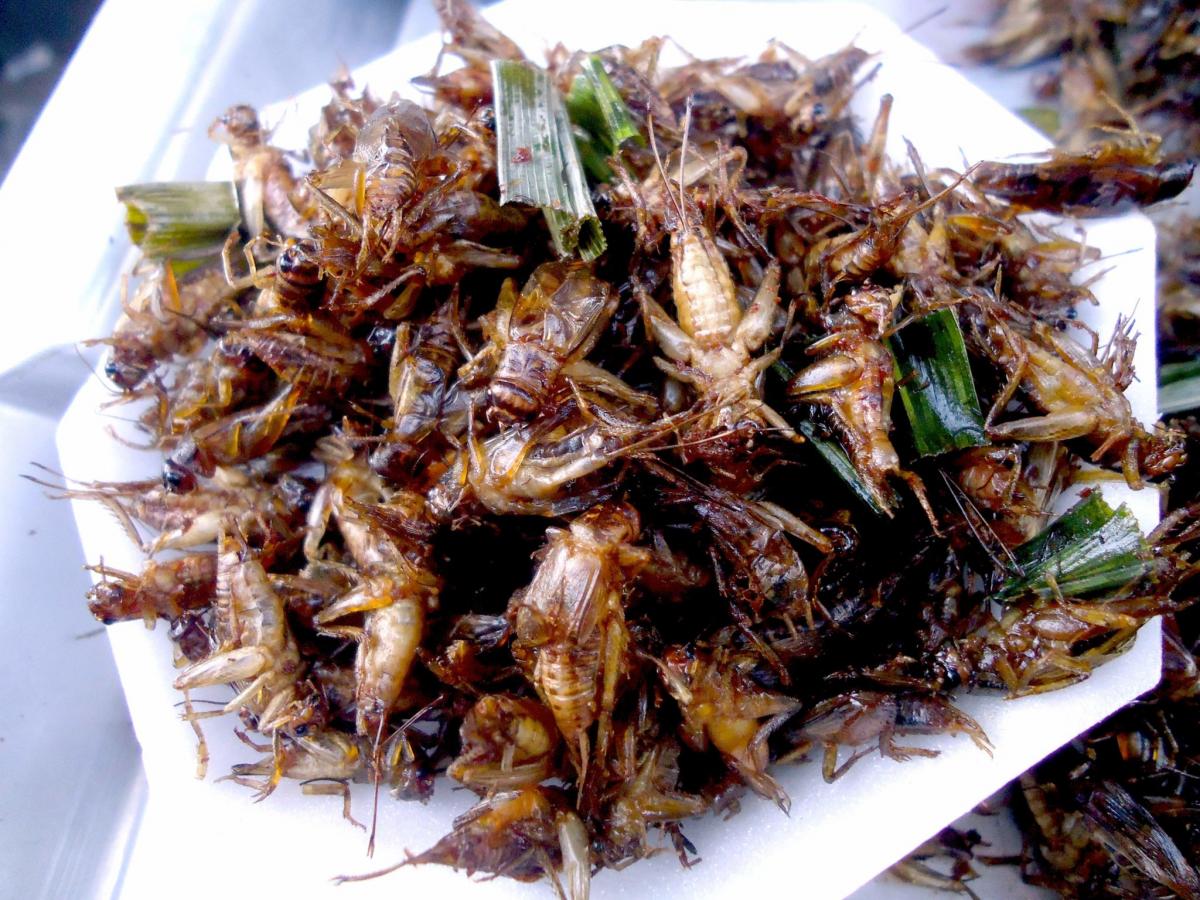
One particular option is insects. As FAO points out, edible insects contain high quality protein, vitamins, and amino acids for humans. Insects have a high food conversion rate. For example, crickets need six times less feed than cattle, four times less than sheep, and two times less than pigs and broiler chickens to produce the same amount of protein. Moreover, they emit less greenhouse gases and ammonia than conventional livestock. They can also be grown on organic waste. Therefore, insects are a potential source for conventional production (mini-livestock) of protein, either for direct human consumption, or indirectly in recomposed foods (with extracted protein from insects); and as a protein source into feedstock mixtures.
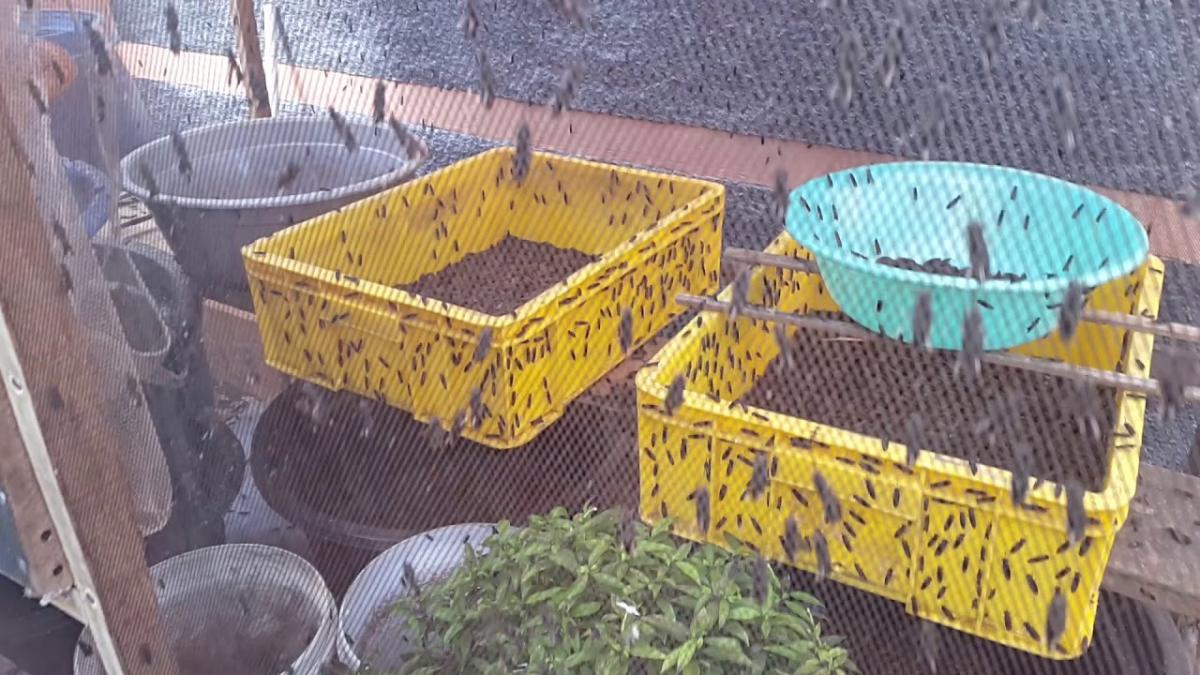
Insects can indeed play an important role as feed for other animals They are already a natural food source for poultry and different kinds of fish. In this regard, the work with Black Soldier flies is extremely encouraging. Their larvae thrive in organic waste (such as coffee bean pulp, fish offal or cattle and chicken manure), reducing the waste mass and stench in the process. Even better, they are high value feed for pig, cattle, poultry and fish. Finally, their high fat content makes it suitable for conversion to biodiesel. On average, 1,000 larvae growing on 1 kg of cattle manure, pig manure and chicken manure produce 36, 58, and 91 grams respectively of biodiesel.
Data from FAO.
Food security and sustainability requires us to eat less meat and consume more vegetable - both our teeth and digestive track seem to indicate that humans are mainly vegetarians, with omnivorous inclination. Right now, beyond the ethical concern for animal wellbeing, the main argument to switch to vegetarian food is environmental. According to Perignon et al., there is a substantial difference in the ecological impact of different diets. They have calculated the greenhouse gas emissions (GHGE) for six kinds of diets and show that just moving to a lower meat-eating diet would result in a reduction of 2.52 kg of CO2 per person every day. And it would also reduce the intake of total fat, saturated fat, and protein.
Results measured in kg of CO2e/2000 kcal.
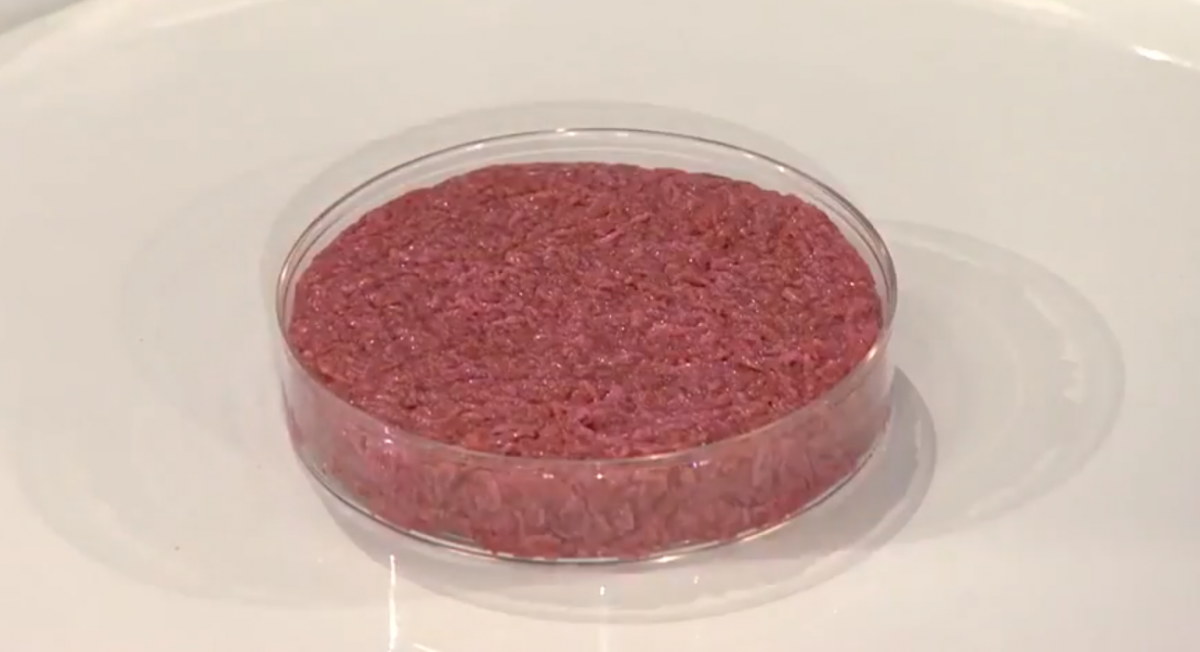
Another option is laboratory grown or cultivated meat, which some see as the ethical and sustainable alternative to traditional meat. Recently, a research team at Osaka University ‘printed’ cultivated Wagyu beef steaks; they claim that they can create fully customized pieces of Wagyu steaks. Also in 2021, Future Meat, an Israeli biotech company, opened the ‘world’s first industrial cultured meat facility’ that can produce the equivalent of 5,000 burgers a day.
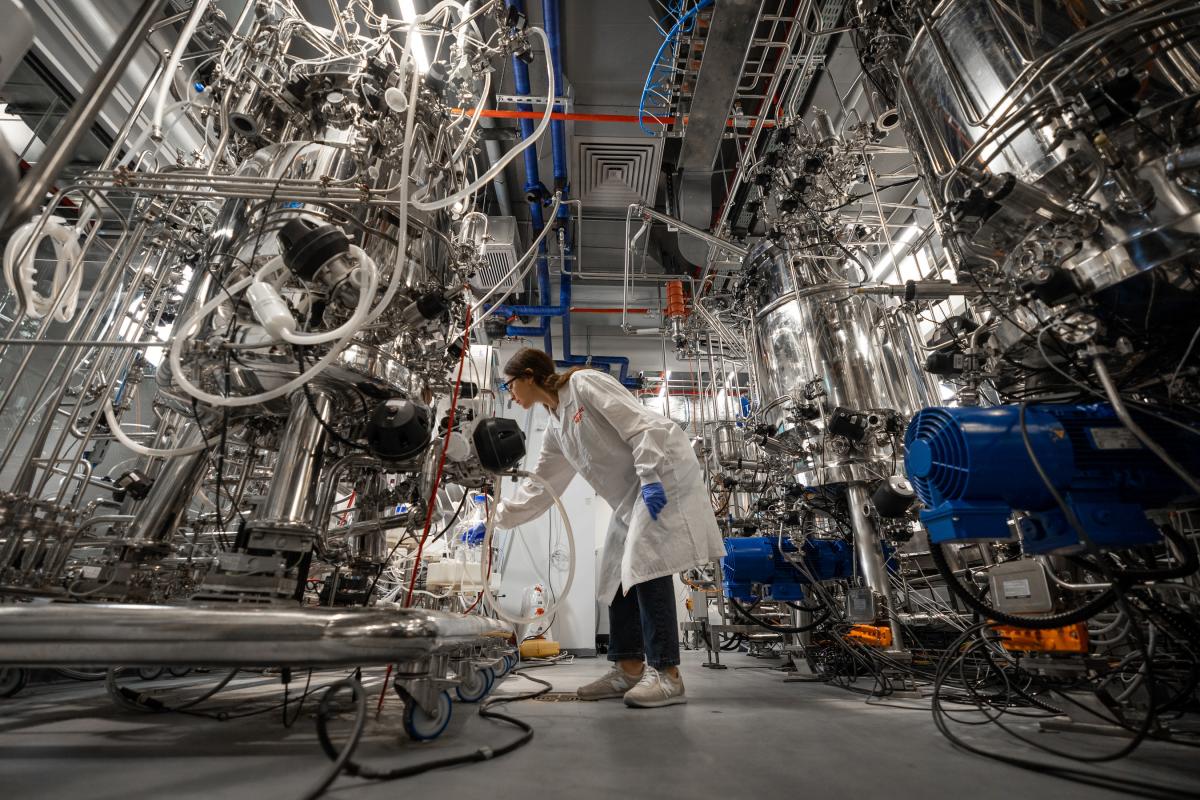
But is cultivated meat really meat? Lab meat is made of stem cells, so a more accurate description would be that it is a cell-based meat-like product.
The advocates of cultivated meant point out that it produces 78 to 96 percent lower greenhouse gas emissions, uses 99 percent less land, and between 82 and 92 percent less water.
On the downside, it is very expensive. In 2013, the first cultivated burger cost $325,000; nowadays, the price may range between $363 to 2,400 per pound. Additionally, it is not totally cruelty free. It still needs stem cells from living animals through biopsy.
There are also health issues to consider. The use of genetic engineered cells might promote or encourage cancer cells because, in essence, some laboratory procedures have a cancer-like behaviour to make cells overgrow. Finally, the use of antibiotics to prevent pathogens casts further doubts on cultivated meat.
Data from Scienceline and One Green Planet
In 1999, the UN declared that ‘the right to adequate food is realized when every man, woman and child, alone or in community with others, has the physical and economic access at all times to adequate food or means for its procurement.’
Our three-part examination of food trends has shown that there is considerable work to do to turn this right into a reality. However, it is important to note that FAO is convinced that ‘hunger and food insecurity can be ended within a generation.’
We have the means to achieve this but it is the will to make it happen that is lacking.