One of the main effects of postnormal times is baffling uncertainty. We seem unable to say what will happen next and, even worse, when it occurs, we are perplexed by the outcome. In such a state, authoritarians, wearing the mask of populism, take the reins of power. Megalomaniacs driven by cults of personality brush aside complexity and offer simple, blunt words and quick fixes. Freedoms, taken for granted, are lost and xenophobic sentiments tear away at the fabric of our societies. The result is a freedom deficit.

 But what is the freedom deficit?
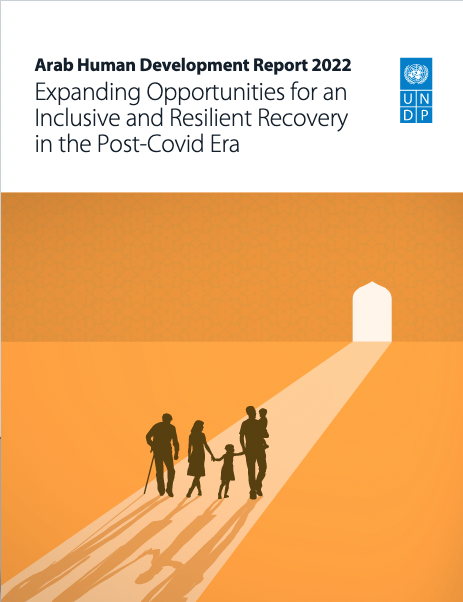
The term was first introduced in the 2002 UNDP Arab Human Development Report. The Report explored how Arab nations continued to perform poorly in terms of the Human Development Index (HDI) but did not suffer the expected economic declines experienced by similar HDI-scoring nations. They concluded that the low HDI score was the result of three deficits: women’s empowerment, knowledge, and freedom. The Report equated freedom with democracy. It also measured freedom in terms of participation, accountability, open expression, and corruption.
In the case of women, a previous trend describes the effect of patriarchy on them.
Freedom deficit has been experienced throughout the world at various levels. The recent COVID-19 pandemic has also given rise to an unprecedented global freedom deficit, justified as necessary for the sake of people’s protection against the spreading virus.
The International Commission of Jurists’ report “Living Like People Who Die Slowly” stated that Covid has had “a dramatic effect on civil, cultural, economic, political, and social rights (…). Yet, at best, human rights – including the right to health – have been peripheral to much of the public discourse and official responses to COVID-19 globally.” Even the prestigious medical journal, The Lancet, has emphasized the failure of many states “to live up to their human rights obligations” during the pandemic.
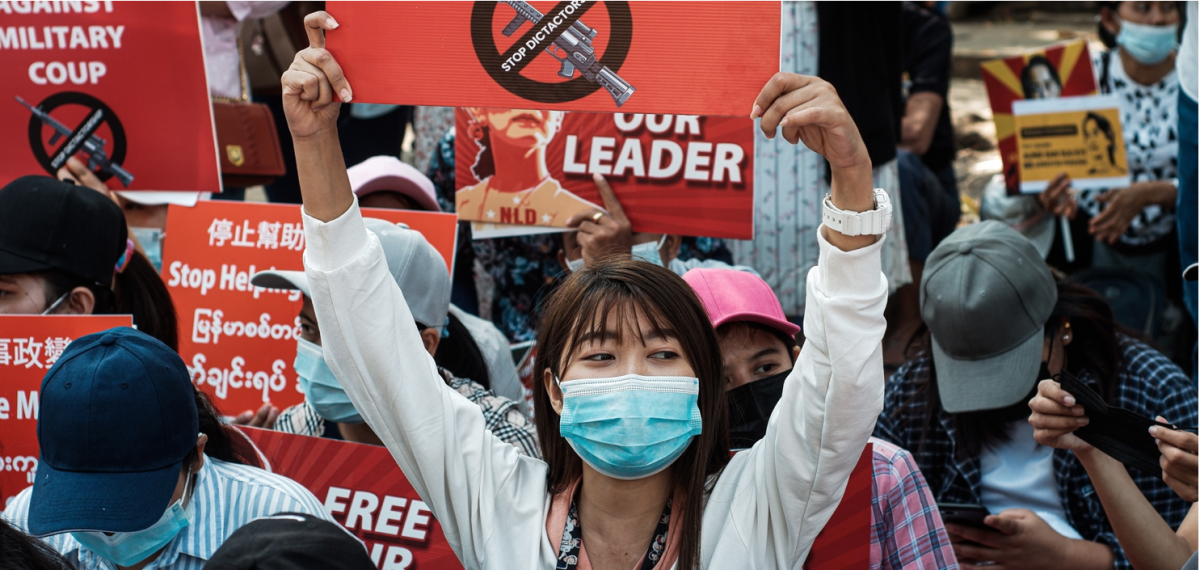
Parallel to the pandemic’s necessary depletion of freedom was the rise in authoritarianism already taking root across the world. The American NGO Freedom House’s report “Freedom in the World 2023” highlights this rise.
The report includes indicators focussed around three main aspects. One of these is a global Freedom score that rates people’s access to political rights and civil liberties in 210 countries and territories. The report metrics range from 0 (no freedom) to 100 (total freedom).
Another aspect investigated by Freedom House emphasised the decline in democratic quality in various countries around the world. Two indicators demonstrate this.
First, the total number of countries with overall declining Global Freedom scores outnumbers those who have experienced a rising score – over the last 17 years. However, 2022 represented the year with the lowest number of countries receiving decreased Global Freedom scores. While this may be a result of reduced pandemic restrictions, it spells hope for the future of global freedom deficits.
Source Freedom in the World:
Second, the indicator measured level of democratic governance, focussing on 29 countries in Europe and Central Asia. The report monitored local governance, the electoral process, media freedom, civil society, the judiciary, judicial independence, and corruption.
Of these 29 countries, only 10 qualify as being ‘Democratic’, and only six are considered as ‘Consolidated Democracies’.
To better understand the condition of a country’s freedom deficit, beyond the authoritarian and democratic conditions of a state, it is essential to consider the degree to which citizens’ rights are respected. The V-Dem project has collected data that exposes various key dimensions of citizens’ rights: the extent to which people are free from government torture, political killings, and forced labour; the government’s respect for property rights; and the people’s freedom of movement, religious belief, expression, and association.
The graphic below traces the evolution of citizens’ rights in six continental regions over the last 100 years. The progression reflects an overall positive trajectory for the rest of these rights, although Africa and Asia are responsible for most of this improvement as Europe and the Americas indicate stalling or backtracking.
The score ranges from 0 (No Respect) to 1 (Rights are Respected).
Source Our World in Data
Freedom deficits have also gone digital. Freedom House assessed the level of internet freedom in 70 countries around the world through in its Freedom on the Net report. Apart from the aggregated score, the report includes measurements for obstacles to internet access, limits on appropriate content, and violations of user rights.
As in previous graphics, the higher the metrics the more internet freedom (less restrictive) the country has.
In the digital domain, another fierce battle is being fought. Information and Communication Technology (ICT) has boosted surveillance’s capacity to monitor citizens to an unprecedented level. Today digital surveillance has become a major control tool, especially within cities. And Asia seems to be leading the charge on this front. It is estimated that there are 1.15 million cameras in China, but in terms of density (cameras per km2), India scores higher and holds the world record: Chennai city has 657.3 cameras per km2.
The graphic shows the estimated number of people (measured in millions) under surveillance in certain countries.
Source Surfshark.
Image by Muhammad Usman at Flaticon
The Freedom deficit has also reached academia. The Academic Freedom Index assesses this particular deficit by researching on five indicators: freedom to research and teach; freedom of academic exchange and dissemination; institutional autonomy; campus integrity; and freedom of academic and cultural expressions on 179 countries.
In the graph we can see the countries with the lowest scores (the maximum score is 1).
Image by Freepik at Flaticon
Corruption has been a critical factor of freedom deficits since the phrase was coined. Where corruption runs rampant and unchecked, freedom is not only limited by authorities but the elites in a society as well.
The following graph shows the Corruption Perception Index (CPI) by country as measured by Transparency International. The CPI uses a scale from 0 (Very Corrupt) to 100 (Very Clean). It is important to note that the global average has been quite stable at 43 since 2012. Over the last decade, two-thirds of the countries studied only scored 50 or below, while 155 countries have either seen a drop in their score or have made little to no progress in combating corruption.
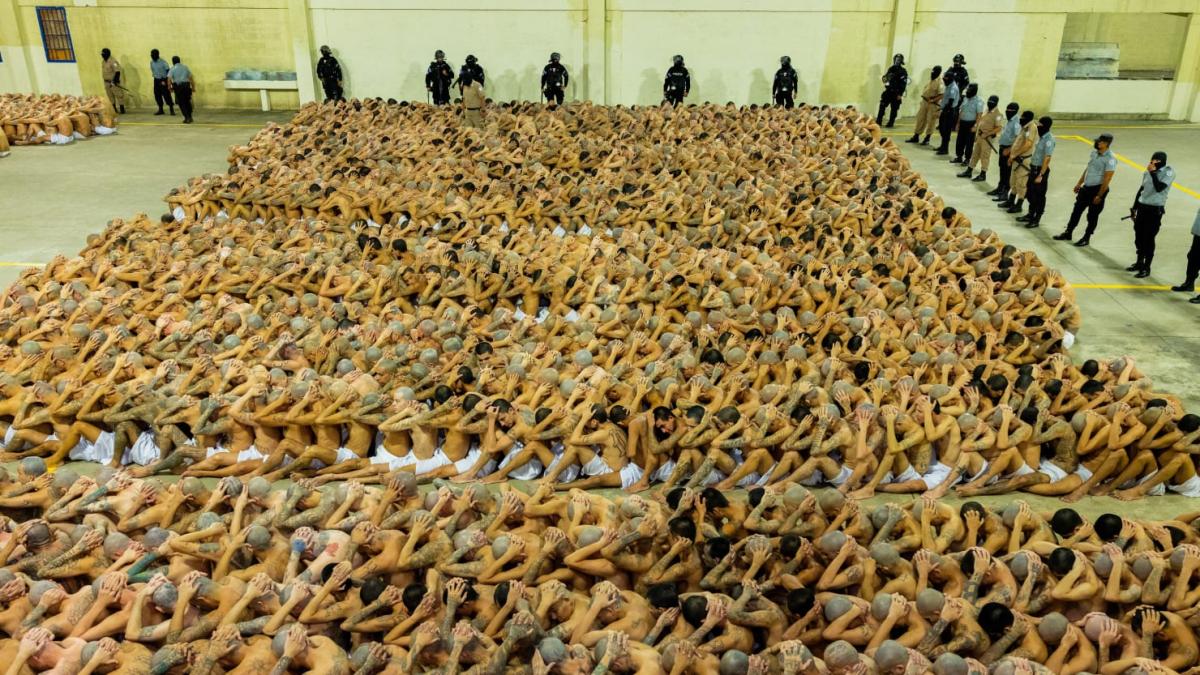
The ultimate deprivation of freedom is incarceration. According to the World Prison Population Report, it is estimated that in 2020 there were at least 11.5 million prisoners all over the world. This figure includes remand prisoners, those detained without or prior to a trial, and sentenced inmates. The figure does not include those held in police facilities prior to trail or sentencing.
The recent opening of the Centro de Confinamiento del Terrorismo (CECOT), a mega prison in El Salvador, exemplifies the cases in which government and social oppression are aligned. As CECOT has been made to incarcerate violent gang members (now labelled as terrorist), Salvadorean citizens generally support the initiative. Yet, it still begs the question whether or not such facilities actually address the roots of social and economic problems.
If we look at the prison population rate (the number of prisoners per 100,000 people) in 2018, we get a different perspective of the issue. Except for the US, the countries with the highest prison population rates also bear the worst Global Freedom scores.
However, the US still makes an interesting and insightful case. The US has, by far, the highest ratio in the world, 655. Since the world average sits at 173, this means that roughly one in every four inmates in the world is imprisoned in the US. Given the gross overrepresentation of ethnic minorities in the US prison population, various questions arise in relation to criminality, social inequalities and oppression.
Source Our World in Data
The COVID-19 pandemic may have led to further freedom deficits, but the catastrophic event also presents an opportunity to restore balance between order and freedom. Postnormal times are after all a transitional period where such old-fashioned dichotomies ought to be finally laid to rest.
But in endeavouring to end the global freedom deficit, we must enrich ourselves with a more rounded understanding of the changes happening all around us. It is important to be aware of those seeking to drive the deficit further through populist and simplistic solutions and navigate the uncertainty that gives rise to authoritarians. And it is essential to attain a deeper understanding of the complex relationships at play between freedom, security, and peace in postnormal times.