
Robots. The concept alone evokes a wide host of opinions and drudges up or reveals a spectrum of prejudices. While almost anyone can identify a robot without hesitation, few can provide a proper definition. Yet, fundamentally, a robot is just a machine capable of performing complex functions automatically. Nothing more, nothing less.
The popular images we have depict robots as anthropomorphic machines, capable of carrying out tasks far beyond human aptitude. The origin of the notion of Robot was developed by the Czech artist Josef Čapek, early in the twentieth century. It would be his brother, Karel who would popularise the word itself in his 1921 play, R.U.R. (Rossum Universal Robots). In the play, artificial beings, ‘robots’, assist humans in a variety of tasks. Ultimately, the robots rebel against their masters and eliminate the humans.
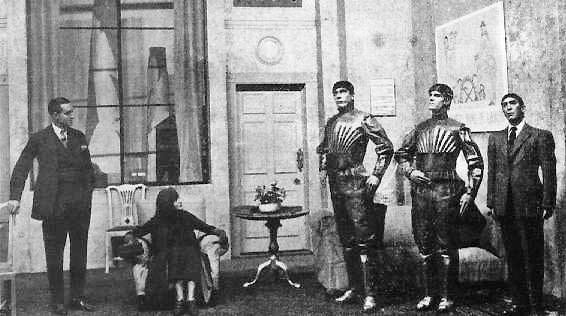

Long before the first operational robots rolled off the assembly line, they had already colonised our imagination.
In 1927, we saw the first robot Fritz Lang’s Metropolis, Maria, a Maschinenmensch (machine-human). Designed in the likeness of the female form, she would also be the first Gynoid, a gynomorphic humanoid robot.
During the 1930s and 1940s, we began to see the first true operative robots. In their initial iterations, robots were simple artificial arms with one or two joins that performed simple functions. They were not really capable of the many wonderful things robots were doing in movies, books, or comics.
The first proper industrial robot was Unimate, developed by the American inventor George Devol and American physicist Joseph Engelberger in 1956. Unimate was initially put to work on General Motors’ assembly line in 1961. Its original function was to move objects, something it did with a high accuracy (within 1/10,000 of an inch).
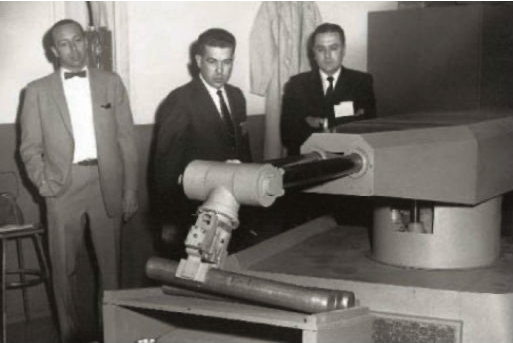
In just a few decades, the stock of Industrial Robots (measured then in the thousands) has grown exuberantly. Particularly in the last decade, units produced grew from over one to almost three million.
Source: World Robotics 2020
During the last decade, the Installation of Industrial Robots has been truly phenomenal. Roughly 120,000 robots installed in 2010 increased to more than 373,000 units in 2019 (although the peak was in 2018 with almost 415,000 installations). This means that there may be more than 2.7 million industrial robots operating today.
However, more than 98% of those installations took place in three regions: Asia - Pacific, Europe, and North America. But we can narrow it down a bit more as just five countries account for 73% of all installations: China, Japan, South Korea, the United States, and Germany.
Source: International Federation of Robotics. Measured in thousands
China hosts the greatest number of industrial robots. In 2018, China’s stock accounted for 38% of the world’s robots installations. But if we measure robot density, the number of robots per 10,000 workers in manufacturing, China is not even in the top ten.
For years South Korea has been leading this ranking, but most recently Singapore has taken the lead with its burgeoning production and deployment of robots (and not only in manufacturing).
Source: The Robot Report, Statista and International Federation of Robotics
Page 8
If we look at the Uses of these robots, the automotive and electronic industries hold half of the available robot units. Although, the number of robots with an unspecified use has grown from less than 15% to more than 20%, raising all kinds of questions.
Source: International Federation of Robotics. Measured in thousands
The arrival of the Covid-19 pandemic has slowed down Industrial Robots installation. However, one kind of industrial robots continues to be produced, uninhibited by the global shutdown: Collaborative Robots.
Source International Federation of Robotics (measured in thousands)
Collaborative Robots or Cobots are robots specifically created to interact with people - sometimes, as you can see, in very close proximity to humans without need for social distancing. To accommodate this closeness, they are built with materials and failsafes (software and sensors) to ensure people’s safety. Although they are usually considered Industrial robots, the fact that they are designed to work jointly alongside humans places them somewhere between industrial and service robots.
The International Federation of Robotics has stablished four levels of collaboration:
- Coexistence: Human and robot work alongside each other without a fence, but with no shared workspace.
- Sequential Collaboration: Human and robot are active in shared workspace, but their motions are sequential; they do not work on the same part at the same time.
- Cooperation: Robot and human work on the same part at the same time, with both in motion.
- Responsive Collaboration: The robot responds in real-time to movement of the human worker.
 Service robots are defined as robot “that performs useful tasks for humans or equipment excluding industrial automation applications”.
In 2019, more than 23 million service robots were sold. Of those, the biggest segment was of Domestic Robots with 18.6 million followed by Entertainment robots with 4.6 million units.
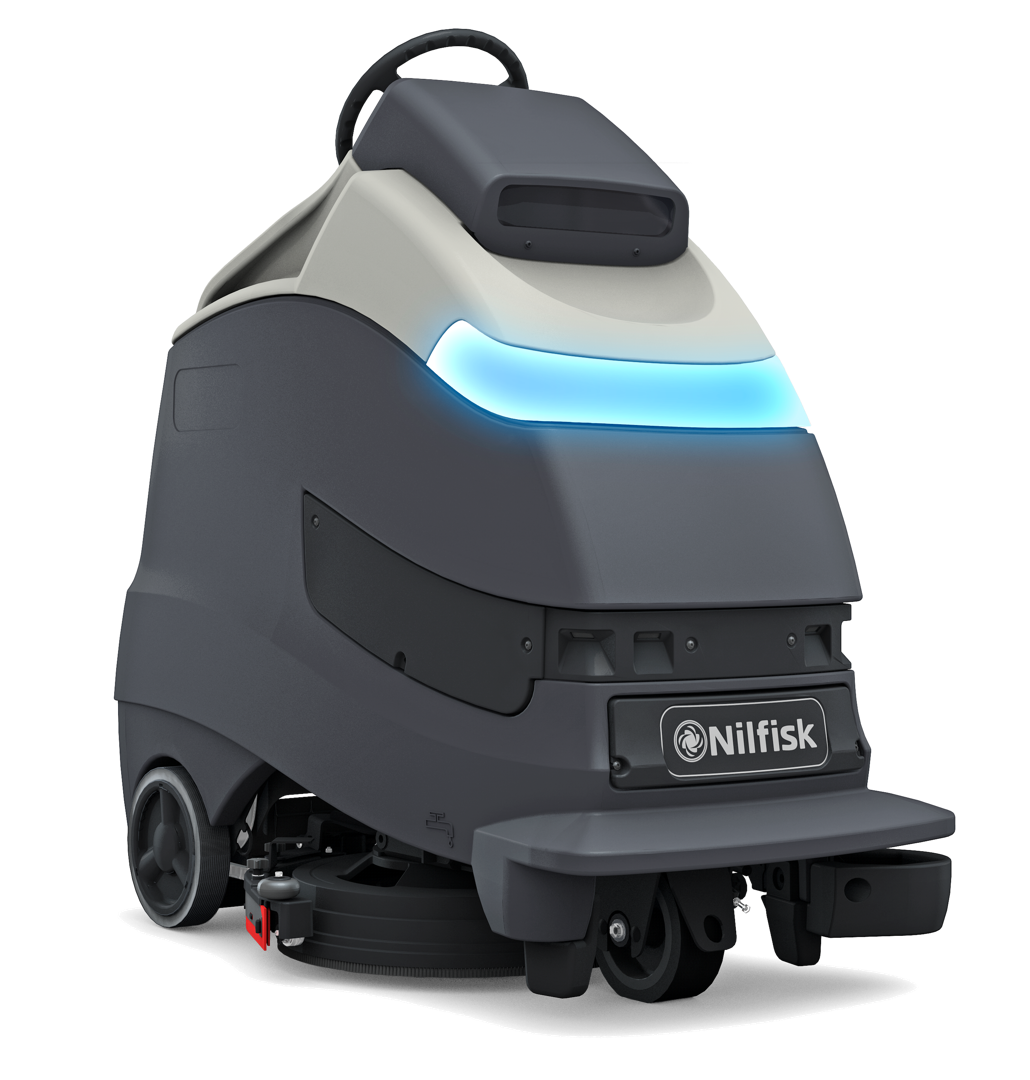
Unlike industrial robots, service robots have not been affected by the pandemic - on the contrary, in some cases, such as cleaning robots, Covid-19 has generated new opportunities. Like this Nilfisk UV cleaning robot that has been used at Pittsburgh International Airport.
Professional robots also come under the Service Robots umbrella; and they are a big business. If we look at the turnover of professional robots (measured in billions USD), we can see how these three categories of robots have been growing.
Medical robots amount for 47% of the total turnover, something that should not surprise us as robotic surgery systems are very expensive. Logistic units have also experienced a substantial increase, while field robots (mostly for agricultural applications) have experienced more modest rises.
Source, World Robotics 2020.
But if we look at the Number of Unit Sales (measured in thousands), we can see that logistic robots are the highest selling of professional service robots. And it is no wonder as they have become indispensable for many big companies like Amazon or Alibaba.
Another aspect worth noting is the unit sales of defence robots, larger than those of field, cleaning, or maintenance robots.
Source: World Robotics 2020.
The kind or robots with the highest Number of Unit Sales are service robots for personal or domestic use. And with a significant distinction: where in the previous graph the measure was thousands of units, here the measure is in millions of units.
And yes, millions of homes have these kind or robots (for example vacuum cleaners); even the sales of entertainment robots is on the rise. Most of these sales are toys, but their applications are becoming more and more diverse as you will be able to see in the last map.
Source: World Robotics 2020.
Among professional robots there is one category that is raising numerous concerns. Military and Defence robots and particularly, LAWS, Lethal Autonomous Weapons Systems - the new frontier in military development. While LAWS combine a high degree of accuracy with a great lethal capacity, all at a low cost, they also raise substantial ethical and moral issues. As UN Secretary General, António Guterres, has declared: “machines with the power and discretion to take lives without human involvement are politically unacceptable, morally repugnant and should be prohibited by international law.”
Here you can find geolocations of many robots that are remarkable in one sense or another. Robots are becoming more and more widespread. However, their highest concentration is in four places: Massachusetts and California in the US, and Germany and Japan.