
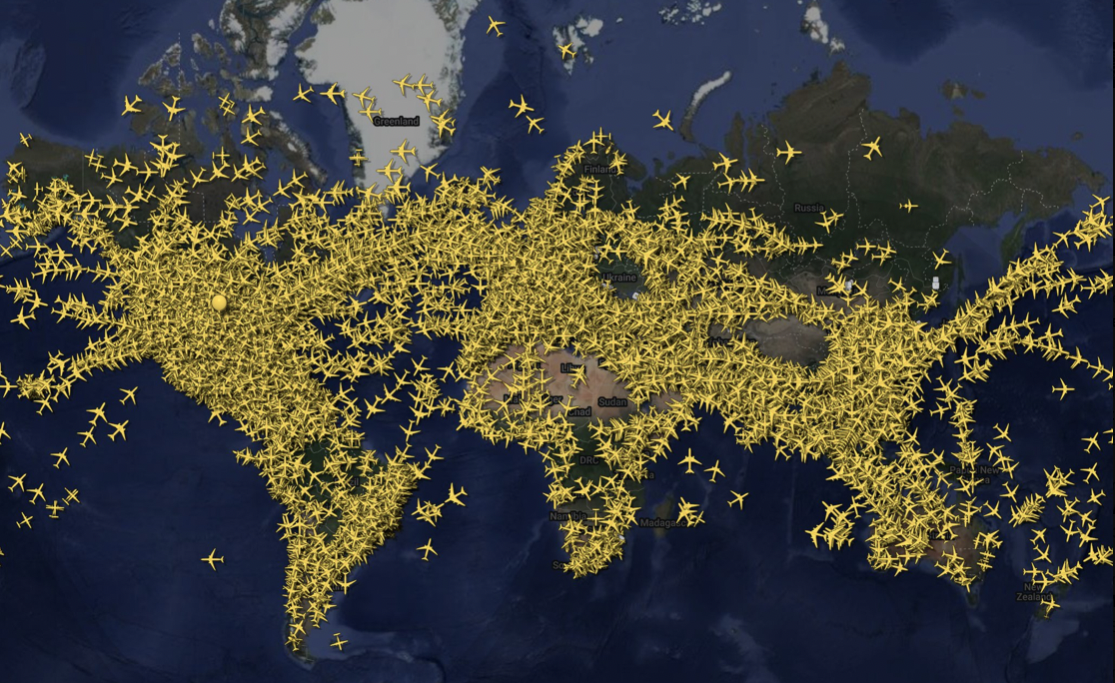
On 6 July 2023, the Flightradar24 website tracked 134,386 commercial flights, a new record. When this screenshot was taken, 19:00 UTC, more than 20,000 planes were flying. In all likelihood, this record will be surpassed very soon.
One of the fastest recoveries following the Covid-19 pandemic pause was air travel, which has already returned to pre-pandemic levels. As the longing for escape has propelled more tourist activities, those levels will quickly be surpassed. But this comes at a cost – a deep and complex cost associated with the climate emergency and various other simultaneous factors exacerbated in postnormal times.
Just before the pandemic halted all global air travel, there were almost 1.5 billion annual international visitors’ arrivals. The upward trajectory of air travel, particularly in the last 70 years, has been nothing short of spectacular. While the growth in number of international arrivals has remained steady since 1950, beginning in 2003, we see a substantially accelerated rise due to the emergence of low-cost flight companies. Coinciding with the arrival of budget airlines, a decreased quality in traveller experience has been the result of such cost cutting measures as shrinking seat size and leg space availability, as shown by The New York Times.
Source: Statista
Image by Freepik at Flaticon
Being one of the most critical factors in the growth of air travel, tourism has also had a significant impact on the CO₂ emissions of several countries. In the following graph we show the CO₂ emissions from international aviation in 2018, measured per capita in different countries.
It is interesting to note that the emissions for international transport are categorized as ‘bunker fuels’. Allocating them is a complex task. In this graph, the emissions have been assigned to the country of departure. But this poses a problem as there is a great disparity between which countries people chose to fly to.
The second graph attempts to account for this discrepancy by adjusting the emissions for tourism. This is done by comparing the ratio of inbound to outbound travellers. For instance, if Spain had 50% more incoming than outgoing travellers, the capita footprint would be reduced by 50%. Yet, the UK had 75% more outgoing travellers than incoming, the footprint would be increased by 75%.
But flying remains an activity dominated by the wealthy. The next graph demonstrates this inequality by presenting the distribution of commercial flying, divided by income classification.
High income countries account for more than 60% of all commercial flight CO₂ emissions. If we add the upper-middle income states, we get 90% of all flight emissions. Even at 35,000 ft, radical inequalities persist.
To obtain the fullest picture possible of this impact, it is an essential to take into account the relative weight of passengers versus freight flights. One in every two flights is international while less than one in every five is a freight flight.
Source: Our World in Data
However, the type of transport contributing the most to CO₂ emissions is road mobility. Almost 75% of total emissions come from road transport; and freight is almost 30% of these total emissions. The flexibility with which short term demands can be accommodated along with the ability to deliver form door to door explains the growth of road-based freight delivery. In Europe alone, the road freight market raised from €276.3 billion in 2010 to €350.5 billion in 2019, and it is estimated to reach €417 billion in 2025 despite the impact of both the pandemic and the Ukraine war.
Sources: Our World in Data and Statista
Yet, total emissions, while indeed a key indicator, do not paint the full picture. It is also important to investigate energy efficiency. In 2019, the UK Department for Business, Energy & Industrial Strategy published a report estimating the carbon footprint accumulated by travel per kilometre. The carbon footprint was measured in grams of carbon dioxide-equivalents per passenger kilometre travelled. Using official conversion factors, the results revealed, in terms of efficiency, travel by train leaves the smallest carbon footprint.
Source: Our World in Data
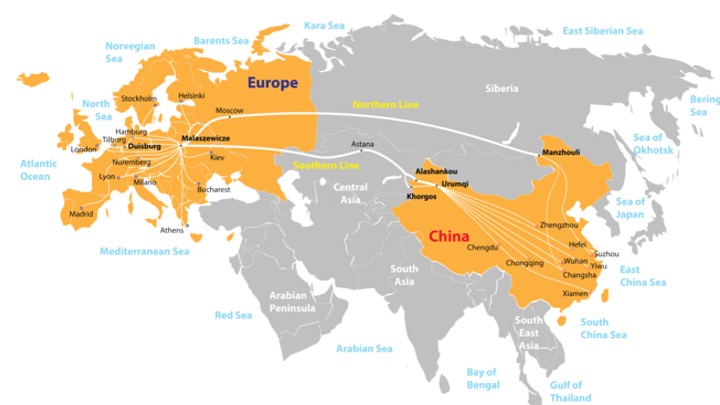
The railway connections between China and Europe comes as good news. The Belt and Road Initiative (BRI) is currently connecting 92 cities in 21 countries stretching more than 10,000 km from Chengdu to Milan and amounting to $50 billion worth of trade with more than 12,000 train per year. But the plan is to complete the network as shown in the image below.
The logic of increased train travel is simple. Ships travel very slowly, and planes are expensive and subject to numerous delays. Both were brought to an almost complete halt by the Covid-19 pandemic. Movement by train is considered a more reliable mode of transportation, that cuts down on costs, and, as was shown above, is much more sustainable.
Source: CGTN
Image by SCMO research
Be it by air, sea, road, or rail we must shift beyond tourism’s impact on climate change to understand its wider impacts. To gain some valuable insight, the World Economic Forum created the Travel & Tourism Competitive Index that, later, became the Travel & Tourism Development Index. This index measure different factors and policies that enable the development of the transportation and tourism sectors and how, in turn, these sectors contribute to the development of a given country.
In the latest Index report, we can see the performance of 117 countries, the score ranges from 1 to 7, 7 being the highest possible score indicating the most developed Travel & Tourism. Japan, USA, and Spain are the three countries topping the list with a score of 5.2.
Source: Travel & Tourism Development Index 2021
The Covid-19 pandemic revealed the true vulnerability of this economic sector. Before the pandemic the value of the travel and tourism activity had reached $9,630 billion, annually. In 2020, this dropped to $4,775 billion, a 50.4% loss, and 62 million jobs were lost worldwide in that period.
Now, almost every country has shifted their emphasis on re-establishing and surpassing pre-Covid figures. But with the rising impacts of climate change, this is a very short-sighted strategy.
Source: World Travel & Tourism Council
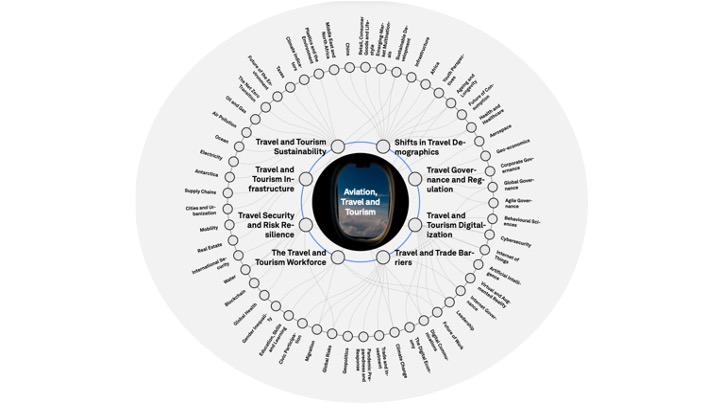
Nonetheless, tourism is a powerful driver for economic development and seen by many as the solution to the economic woes felt in the wake of the recent pandemic. As the Secretary-General of the UNWTO, Zurab Pololikashvili puts it ‘Tourism is a genuine driver of solidarity and development’. Something on which both the World Economic Forum and the World Bank agree as they are confident that tourism can be a suitable tool to eliminate extreme poverty and to promote shared prosperity. Because of this sentiment, tourism is promoted as a ‘Big Picture’, showing all the connections (and potential synergies) to the travel and tourism industry.
Source: World Economic Forum
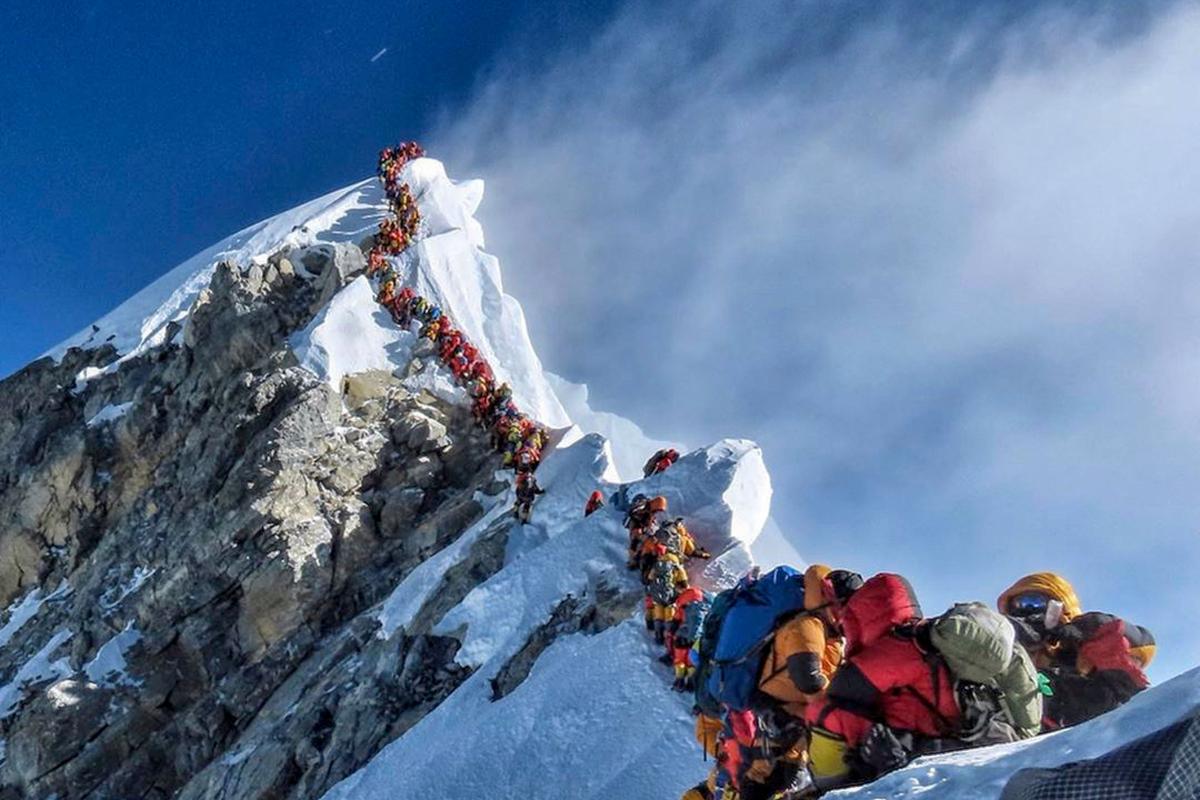
The potential economic goods offered by tourism is often quickly balanced with the almost certain harm done to the destination sought. Tourism tends to consume what it seeks. The combination of affordable travel with a popular destination can quickly turn a lovely spot into an overcrowded place. One of the most extreme example is Mount Everest. The image of people queuing to reach the summit has nearly become synonymous with the mountain itself! Hundreds, if not thousands, of mountaineers, continuously arrive in Nepal, poised to reach the peak. This has transformed the adventurous ascension into a tedious queue. This is not only creating serious litter problems on the mountain, but it is also creating additional risk for mountaineers as the ascension has become a longer process, and casualties are on the rise.
Image by AFP/@nimsdai/Project Possible
The United Nations has worked with the World Tourism Organisation to develop a Global Code of Ethics for Tourism. This code states in Article 1.2: ‘tourism activities should be conducted in harmony with the attributes and traditions of the host regions and countries and in respect for their laws, practices and customs’.
Article 5.2 also offers an interesting insight: ‘tourism policies should be applied in such a way as to help to raise the standard of living of the populations of the regions visited and meet their needs’.
Given the right to tourism is considered to be universal, Article 7.2 notes: ‘the universal right to tourism must be regarded as the corollary of the right to rest and leisure, (…) guaranteed by Article 24 of the Universal Declaration of Human Rights and Article 7.d of the International Covenant on Economic, Social and Cultural Rights’.
Tourism as it currently stands is deeply unsustainable and a terror for the denizens of the hot go-to places. It simply consumes too much energy and resources and is not helping as the climate change we face rapidly becomes a climate crisis. Several European countries, such as France, are already beginning to apply bans on short flights. Other restrictions on travelling are being considered and look to be implemented soon.
Moreover, many of the favourite destinations will be severely affected by climate emergency: from simply being too hot and/or too dry to visit to the more radical weather events such as droughts, deadly heat, and second and third order effects yet unthought.
Sooner or later, we may be forced to explore new ways of travelling using technical possibilities offered by virtual reality.
Image by Webb VR