The general perception is that patriarchy and various issues associated with it, such as gender equality and women’s’ rights, is largely a problem of Muslim societies. This perception is enhanced by actions such as those of the Taliban. As Roza Otunbayeya, head of the UN Assistance Mission in Afghanistan, declares: “Afghanistan under the Taliban remains the most repressive country in the world regarding women’s rights”. Similar pronouncements have also been made about other Arab and Muslim countries.
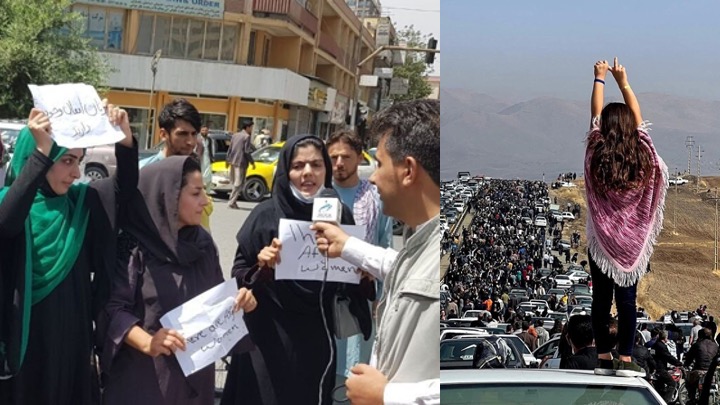
But patriarchy is hardly a problem just for Muslim countries. It is, in fact, a global problem.
According to UN “we’re still centuries away from gender equality. Estimates say it will take up to 286 years to close legal gaps and remove discriminatory laws, 140 years for women to be represented equally in positions of power and leadership at work, and at least 40 years to achieve equal representation in national parliaments. As of the end of 2022, it’s estimated that around 383 million women and girls live in extreme poverty. And every 11 minutes, a woman or girl is killed by someone in her own family.”

Patriarchy acts as a global structural bias to privilege men over women.
One way to visualize is to use the UN Gender Inequality Index (GII) compiled within the Human Development Report (HDR).
And, as the map shows, the Northern European countries are the ones with a lower index.
The GII is a composite index, and it includes several variables like Adolescent birth rate, that is the number of births per 1,000 women of girls between 15 and 19 years. According to World Health Organization, we are talking of 21 million pregnancies every year, of which half are undesired. 55% of these unintended pregnancies end in unsafe abortions, particularly in low- and medium-income countries. Even in the best conditions an adolescent pregnancy is risky for both the mother and the baby.
Another aspect that is measured by the GII is the participation of women (15 years and older) in the labour force. It is worth noting that the highest rankings are in poorer countries as we already explained in the trend devoted to labour.
Of course, the access to the labour market is also dependent on the education level of the potential workers. Thus, it is logical that the GII also includes the percentage of women with at least some secondary education.
Here the results for Muslim countries are mixed. While some countries, like Afghanistan, rank really low, others, such as Oman or Egypt do very well.
The GII also measures the share of seats in parliaments held by women. The results are quite bad everywhere. Even more so for any Muslim countries, except for the Federal National Council of the United Arab Emirates (but this is a consultive body where most of the seats are designated not elected).
If we check the UN “The World’s Women 2020: Trends and Statistics” Report, we can see some professional and business data. What it shows is that, globally, the proportion of women in managerial positions has increased from 25.14 to 27.89% - not much. But the two regions that show worse performance (and weaker improvement) over the past 20 years are Central and Southern Asia and Northern Africa and Western Asia - the regions with more Muslim countries.
There is another vital concern: the violence against women. According to UN “One in three women worldwide experience physical or sexual violence, mostly by an intimate partner.”
A 2018 report by the World Health Organization (WHO) showed that, when it comes to violence, women have the enemy at home. The estimates of intimate partner violence are horrifying, between 641 to 753 million ever married or partnered women (aged 15 and older) have suffered physical or sexual violence by their companions. The report also compared the lifetime violence to that estimated during 12 months of 2018.
The trend has been positive. But, as the report claims, this violence is “pervasive globally”.
The WHO report also estimated the regional prevalence of lifetime non-partner sexual violence. We obtain these results by using the SDG regional classification.
There is some concern about the reliability of these figures. Given the stigma associated with this kind of crimes, they are not denounced in many places. Moreover, in several countries, sexual violence is still considered a crime against the honour of the family, rather than an issue of freedom and dignity of women - something that tends to increase the reluctance to denounce it.
There is another execrable kind of violence against women: Female Genital Mutilation (FGM). According to the United Nations Children’s Fund and the WHO, at least 200 million girls and women have undergone FGM. This, in addition to gruesome violation of women’s bodies and dignity, has severe health implications for the rest of their life.
FGM is commonly associated with Islam. Yet, it is not a religious but a cultural issue. It is practiced both in Muslim and Christian countries.
However, in general, there is decrease in its application - just not fast or global enough.
So, the question remains: do Muslim countries rate worse on gender issues?
We have grouped those countries where Muslim are the majoritary religious group, and then compared their gender inequality performance with that of classical UN human development index classification. Analysing the results, we can say: yes, they do.
In the aggregated GII category, Muslim countries rate worse than the world’s average. In most single variables Muslim states perform below all the other groups. Only in Secondary education, Adolescent birth rate, and labour participation, Muslim states get slightly better ratings than the medium and/or low HDI countries.
Patriarchy is a global blight. All countries need to improve their record in this regard.
Throughout the world, women face a variety of obstacles that seriously hinder their capacity to act in the public sphere and to pursue their interests independently.
Much of our global past is witness to women’s oppression. We cannot risk the future by marginalizing half of humanity. Considering the record of men so far, women are positively the better half.